Things to Do in Interlaken
Two lakes, three peaks, and the thin Alpine air that rewires your nerve endings
Top Things to Do in Interlaken
Find activities and tours you'll actually want to do. Book through our partners -- no booking fees.


Plan Your Trip
Essential guides for timing and budgeting
Climate Guide
Best times to visit based on weather and events
View guide →Day Trips
The best excursions and nearby destinations worth the journey
Explore day trips →Where to Stay
Best neighbourhoods, hotel picks, and booking tips
Find hotels →Travel Insurance
What's required, what coverage matters, and how to get a quote
Read guide →What to Pack
Climate-specific gear, essentials, and what to leave at home
See packing list →When Should You Visit Interlaken?
Tap a month for weather, crowds, and highlights
View full year-round climate guide →Explore Interlaken

Your Guide to Interlaken
About Interlaken
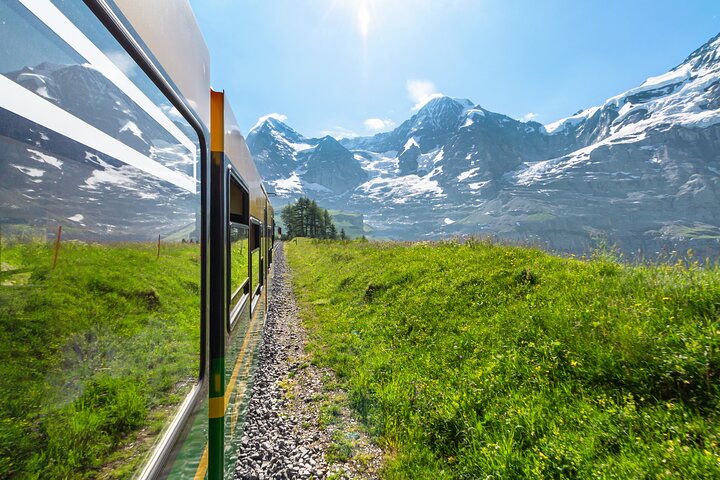
Interlaken slaps you awake through the train window from Bern before your boots hit the platform. The Aare glows that impossible glacial green between the town and Unterseen's old quarter, while the Jungfrau massif rears up like a stone tsunami filling half the sky. First-timers shut up mid-sentence and stare. The town rides a flat alluvial tongue between Lake Thun west and Lake Brienz east, a fluke that delivered one of Europe's grandest panoramas and, later, crowned it the Alps' adventure-sports capital.
Walk the Höheweg, the broad promenade lined with belle-époque palaces built for Victorian lung patients, and the view hasn't aged but the crowd has. Paragliders spiral off Harder Kulm, landing smack on the Höhematte in midtown. Wetsuited canyoning crews pile into vans on Jungfraustrasse. Japanese, Korean, and Indian coaches park along Bahnhofstrasse, keeping the watch shops alive and turning July afternoons into duty-free corridors.
Fair trade. The town itself is tiny and architecturally plain. But nobody came for the town. Interlaken is a launchpad. Duck across the bridge into Unterseen for cobblestones and a thirteenth-century church tower the hotels hide, or ride the cog railway to Schynige Platte where the alpine garden blooms at nearly two thousand metres and cowbells score the wind.
Switzerland will empty your wallet. Yet Interlaken justifies the damage. Few places plant you this deep in this much scenery for this little sweat.
Travel Tips
Transportation: Interlaken keeps two stations, Ost and West, and mixing them up derails your day. West links to Bern, Spiez, and the steamers on Thun. Ost opens the Jungfrau railway, Grindelwald, and Lauterbrunnen. The Swiss Travel Pass swallows both plus the lake boats, probably the smartest franc you'll drop here, because single mountain tickets hemorrhage money fast. Inside town, twenty minutes of walking covers everything. For the valleys, the Berner Oberland Regional Pass bundles lifts and cogs at a serious markdown. One trap: the last descent from Jungfraujoch leaves earlier than you'd guess, and missing it buys a pricey taxi crawl through Lauterbrunnen after dark.
Money: Switzerland runs on the Swiss franc, and Interlaken is brutal on any budget. Plastic works almost everywhere, even mountain huts and cable cars, with contactless the default. ATMs huddle around Bahnhofstrasse and inside both stations. Tipping isn't the North American song and dance. Service is built in, so round up a couple of francs and move on. Insider tip: the Coop and Migros supermarkets on Bahnhofstrasse stock ready-made sandwiches, rösti, and shockingly decent sushi for a sliver of what the Höheweg terraces charge. Shoestring travelers lunch from the supermarket and splurge on one proper Älplermagronen dinner. Their wallets breathe easier.
Cultural Respect: The Bernese Oberland is quieter and more buttoned-up than Zurich or Geneva, and locals bristle when visitors treat their home like an amusement park. Noise after ten draws real complaints, not just glares. Lead with Grüezi before switching to English. Most speak it. Yet the greeting counts more than you'd expect. On trails, uphill hikers hold right of way, and a brisk Hoi or nod when passing is mandatory, not polite. Swimming the Aare is tradition. But the current cheats and the water is glacial melt cold enough to freeze your lungs. Jump in where the locals jump, never upstream of the bridges where the pull turns nasty.
Food Safety: Food safety in Switzerland is a non-issue compared with Southeast Asia. Tap water is pristine everywhere, even public fountains unless tagged nicht trinkbar. The challenge is finding soul in a town that feeds tour buses. Ignore the international menus on the Höheweg and cross the Aare bridge into Unterseen, where dining rooms shrink, menus shorten, and rösti sizzles in butter, not microwaves. Order Berner Oberländer Käseschnitte, open-faced cheese toast baked until the edges blister and blacken, usually topped with a fried egg and enough pepper to make your nose run. Up high, the huts at Schynige Platte and First dish thick barley soup and bratwurst that taste better at two thousand metres than physics should allow.
When to Visit
Interlaken's year cleaves in two, and the gap yawns wider than in most Alpine towns. Summer, mid-June to mid-September, is when the place earns its keep. Thermometers read 20, 28 °C (68, 82 °F), trails above Grindelwald and Lauterbrunnen shed their snow, and paragliders orbit the Höhematte from first light to last. July and August are the peak, obviously; rates double against November, and the Jungfraujoch train is packed by mid-morning.
Catch the 07:00 departure if you want the summit terrace without a rugby scrum. September wins on points. Larch forests above Wengen flare gold, the air snaps, visibility clears of summer haze, and prices slacken. October is a roll of the dice. High paths may already be under fresh snow, some lifts close for service. Yet the lakes stay swimmable at 15 °C (59 °F) and the low sun on Lake Brienz could pass for Turner.
Winter, December to March, turns Interlaken into the Jungfrau ski region's valley floor; Grindelwald-First and Kleine Scheidegg sit a train ride away. Thermometers sink to, 2, 5 °C (28, 41 °F) and the town exhales. Ski-season tariffs spike at Christmas and February school holidays. But still undercut Verbier or Zermatt for the same week.
January is coldest, cheapest, emptiest, and snowpack at altitude is bulletproof. April and November are the dead zones. Snow has melted, lifts stay shut, trails churn to mud, some hotels lock their doors, and the place feels like a theatre between shows. Skip these months unless solitude trumps alpine access. First-timers should aim for the last fortnight of June: fifteen hours of daylight, wildflowers riot across Schynige Platte's alpine garden, the lakefront beach at Bönigen is warm enough for a swim, and the July coach tsunami has not yet hit.
More Ways to Experience Interlaken
Tours, day trips, and local experiences curated by on-the-ground operators.
Didn't see anything interesting yet?
Browse Viator's full catalog of tours, day trips, food experiences, and private guides in Interlaken.
See All Interlaken Tours on Viator